Buying
Five numbers that matter more than the price
Days on market, price per square foot, the HOA fee, the year built and the tax rate. Read in that order they tell you most of the story.

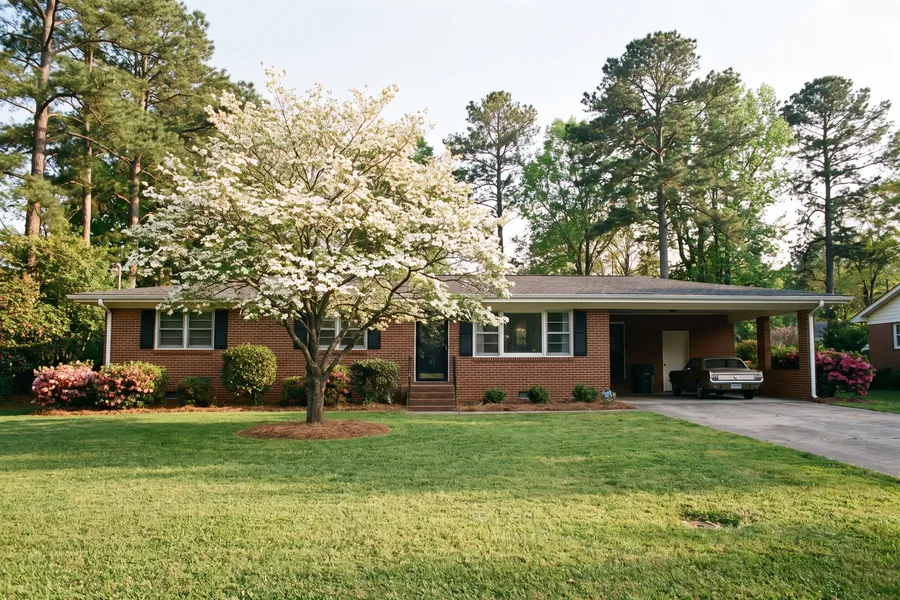
The asking price is the least informative number on a listing. It is a hope, expressed numerically. Five other published numbers tell you far more about what is actually going on, and reading them in this order will save you weeks.
1. Days on market
The count of days since a home was listed, and the one number every agent checks first. It is useless as an absolute. It only means anything relative to the normal time on market for that price band, in that area, right now — and that figure moves constantly, which is why you should ask your agent what it currently is rather than trust a number in an article. We do not publish one on this site, because it is exactly the sort of figure a buyer would act on and nobody could check.
What the comparison tells you once you have the local norm to compare against:
- Well under the norm: priced at or below what the market will bear. Expect competition and have your financing ready before you tour.
- Slightly over it: something is a little off — the price, the photographs, or a feature buyers are discounting more than the seller expected.
- Far over it: there is a reason, and it is usually price. It is also where the negotiating room tends to be, so it is worth asking what the reason is rather than skipping past it.
Watch for a listing that was withdrawn and relisted to reset the counter. The history is visible, and a good agent will tell you when they see it.
2. Price per square foot
Not an absolute measure — it is a comparison tool, and only against genuinely similar homes in the same area. A 1,200 sq ft bungalow always shows a higher price per square foot than a 3,400 sq ft two-storey, because land, kitchens and bathrooms do not scale with floor area.
Where it earns its keep is against the immediate comparables. Work out the figure for four or five similar homes nearby, then work it out for this one. If it is asking materially more per square foot than its neighbours, either it has something they do not — a renovation, a bigger lot, a better position — or it is optimistic. Both are worth knowing before you tour. We are deliberately not printing a per-square-foot figure for any Raleigh neighbourhood here: it would be out of date by the time you read it, and your agent can pull the current one for the exact block you are asking about.
3. The HOA fee
Two invented examples, purely to show the arithmetic: a $419,000 condominium carrying a $512 monthly fee, and a $460,000 townhome carrying a $165 one. At the same rate and down payment the cheaper-looking home is the more expensive one to own, by a clear margin, and nothing in the asking prices tells you that.
But the comparison is not that simple either, because the fee often covers water, sewer, trash, exterior maintenance, roof, and the building's insurance — all of which you would otherwise pay separately on a detached house. The only honest comparison is the whole monthly number with the fee included, which is why the estimator on every listing page here has an HOA line in it.
Two follow-up questions, always: what does the fee cover, and when did it last go up.
4. Year built
Not for style. For systems, and for what an inspector is going to find.
- Pre-1978: lead-based paint disclosure applies. Also, plaster, original windows and possibly knob-and-tube remnants.
- 1950s–70s: cast-iron drain lines reaching end of life; original electrical panels; popcorn ceilings that should be tested before removal.
- 1990s–2000s: the original HVAC, roof and water heater are all now at or past their service life, often at the same time.
- Post-2015: systems are young, but check the builder and get an independent inspection anyway — municipal inspection is a code check, not a quality check.
Year built tells you which repairs are due, and that is a budget line, not a deal-breaker.
5. The tax rate
The number people forget entirely until the escrow analysis arrives. Property tax in Wake County is the county rate plus your municipality's. Both are set annually and both are published, so look up the current combined rate for the exact address rather than assuming a figure — and note that it is charged on the assessed value, which is not the purchase price.
The arithmetic is simple once you have the rate: on a $500,000 assessed value, every additional 0.1% of combined rate is about $42 a month, every month, for as long as you own the house.
Cross a county line and the rate changes. Clayton, for instance, is in Johnston County rather than Wake, with a different combined rate and a different school district. That is not a reason to avoid anywhere; it is a reason to look the rate up and run it before you fall in love.
Also worth knowing: Wake County revalues on a four-year cycle. A recent revaluation can move your tax line even though nothing about your house changed.
Reading them together
No single one of these decides anything. They are useful because they either agree with each other or they do not.
A home that has been listed a long while, at a price per square foot below its neighbours, on a larger-than-typical lot, with a kitchen two decades old, tells a coherent story: the house is fine, the kitchen is dated, the price already reflects it, and there is probably room to negotiate. A home that has been sitting just as long with none of those explanations tells you something different — usually that there is a reason the photographs are not showing you, and that the reason is worth finding before you write.
Every specification on every listing on this site is published on the listing page, including the ones that make a home look worse. What you will not find is a sale price, a days-on-market figure or a neighbourhood market statistic: these are invented homes, and inventing those numbers would produce something a real buyer could act on and nobody could check.
Keep going
Other things worth knowing
 FinancingWhat “pre-approved” actually meansThree documents get called the same thing and only one of them changes what a seller thinks of your offer.
 OwningHow to read a condominium reserve studyA thin reserve on a building with a fifteen-year-old roof is a special assessment that has not been scheduled yet.
 Fair HousingWhy we will not say what an area is “like”The most common question we are asked is one we are not permitted to answer, and the reason is more useful to you than an answer would be.