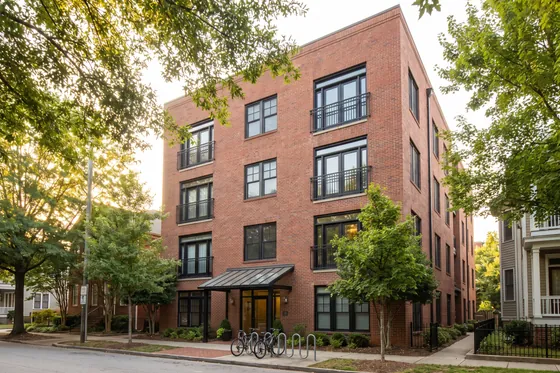
 Active
$232,000
1420 Avent Ferry Road, Unit 12C
Garner · Raleigh, NC
- 2 bd
- 1.5 ba
- 1,040 sq ft
Condo · 198461 days on market
Start with a place
Median list price and the assigned base schools for each area. Attendance areas change — always confirm current assignment with the district before you rely on it.
Nobody has explained any of this to you yet
We start with the number you want to pay every month and work backwards. Not with what a bank will lend you — those are very different numbers, and the gap between them is where first-time buyers get hurt.
Start here
A lender will give you a maximum. It is a real number, produced honestly, based on your income and your debts. It is also the answer to a question you did not ask.
The question you asked was: what do I want to pay every month for thirty years, and still be able to go on holiday? That number is usually 15% to 25% below the maximum, and the difference between the two is a decade of feeling fine versus a decade of feeling tight.
So we do it in this order. Your monthly number first. Then we work backwards through taxes, insurance, any HOA fee and mortgage insurance to a purchase price. Then, and only then, do we look at houses.
Use the estimator below with a real listing price and watch what the tax and insurance lines do. That gap is the whole lesson.
Change any number. Nothing here is a quote — it is arithmetic.
$2,793
estimated total monthly ·$350,100 borrowed
Under 20% down, so private mortgage insurance is included at an estimated 0.55% of the loan a year. On a conventional loan it comes off automatically once you reach 78% loan-to-value, and you can usually request removal at 80%. On most FHA loans it stays for the life of the loan.
Over the full term you would pay about $442,393 in interest, assuming you never pay extra and never refinance.
Estimates only. Actual rates depend on credit, loan type and the day. Wake County property tax is reassessed on a four-year cycle, so a recent revaluation can move the tax line. Talk to a lender for a real quote — we can introduce you to three.
The acronyms, defused
You will hear all of these. Here is what actually separates them, in one table, with the catch stated plainly for each.
| Loan | Down payment | Mortgage insurance | Credit | The catch |
|---|---|---|---|---|
| Conventional | 3% – 20% | PMI below 20% down; cancellable | Typically 620+ | The default. PMI comes off automatically at 78% loan-to-value and can usually be requested at 80%. |
| FHA | 3.5% | Upfront + annual MIP | Lower thresholds than conventional | More forgiving on credit and debt ratios. On most FHA loans the mortgage insurance stays for the life of the loan, so plan to refinance out of it. |
| VA | 0% | No monthly MI; a funding fee applies | Lender-set | For eligible service members, veterans and some surviving spouses. Usually the cheapest money available if you qualify. |
| USDA | 0% | Guarantee fee, upfront + annual | Typically 640+ | Income limits apply and the property must be in an eligible rural area — parts of eastern and southern Wake County still qualify. |
| FHA 203(k) / HomeStyle | 3.5% / 3% | As FHA / conventional | As FHA / conventional | Renovation loans. They finance the purchase and the work in one mortgage, which is how a $289,000 house with an original kitchen becomes a realistic first home. |
General information, not advice about your situation. Programme terms, limits and eligibility change. A licensed lender is the only person who can tell you what you qualify for — we will introduce you to three and we take nothing for it.
Start to finish
Seven stages. Each one has the encouraging version and the fact people usually get wrong.
1–3 days
It feels backwards to call a bank before you have seen a single house. Do it anyway. Twenty minutes on the phone turns a vague hope into a number, and the number is what makes everything after this calm instead of frantic.
Worth knowing Pre-qualification is a conversation. Pre-approval is a lender pulling your credit and verifying income and assets — it is the one sellers take seriously, and it is what you will attach to an offer.
One evening
A lender will tell you the most you can borrow. That is not the same question as what you want to pay every month for thirty years. We will sit down and run the second number, which is the one that matters.
Worth knowing The payment is principal, interest, property tax, homeowner’s insurance, any HOA fee, and PMI if you put down under 20%. In Wake County the tax line alone is roughly 1% of the price a year.
2–8 weeks
This is the part everyone imagines. Expect the first three to recalibrate everything you thought you wanted — that is the job they are doing, and it is not wasted time.
Worth knowing Most of our buyers see between eight and fifteen homes in person. If you have seen thirty, something upstream is off, and it is usually the price band or the area, not you.
Same day
The nervous part. We will talk through price, timing and what to ask for, and we will tell you plainly when we think an offer is a stretch — including when the stretch is worth it.
Worth knowing In North Carolina you offer a Due Diligence Fee (paid to the seller, generally non-refundable) and an Earnest Money Deposit (held in escrow, refundable in most circumstances). They are different instruments and people conflate them constantly.
14–30 days
Your inspection window is the period where you can walk away for any reason. Use it hard. Get the general inspection, and get the specialist out for anything the general inspector flags.
Worth knowing If the appraisal comes in below the contract price, the gap is yours to cover in cash, renegotiate, or walk. Decide before you offer which of the three you would do.
3–4 weeks
The loan is being checked properly now. Your only job is to be boring: same job, same accounts, same debts. It is a strange few weeks of doing nothing on purpose.
Worth knowing Do not open a credit card, finance furniture, or move large sums between accounts. Lenders re-pull credit before closing, and a new tradeline can undo an approval this late.
One morning
You will sign more paper than you expect and it will take about an hour. Then an attorney records the deed, and the house is yours. We will be there, and we will bring something for the first night.
Worth knowing North Carolina closings are handled by an attorney, not a title company. Funds must be wired — and wire fraud is real, so verify the instructions by phone with a number you looked up yourself.
Real, and on our board right now
Active$232,000
Garner · Raleigh, NC
Condo · 198461 days on market
Active$279,000
North Hills · Raleigh, NC
Condo · 201444 days on market
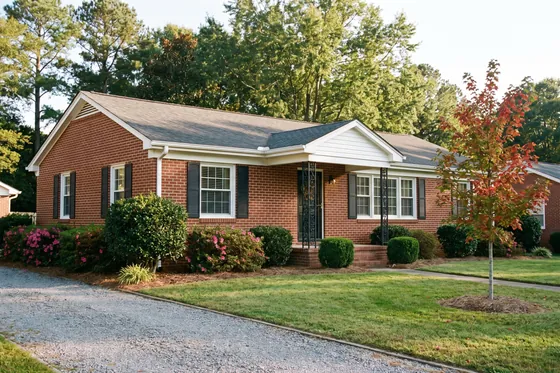 Active
$289,000
Fuquay-Varina · Fuquay-Varina, NC
Single-family · 197243 days on market

Who you would work with
Broker · first-time buyers · lives in Five Points, Raleigh
Nadia bought her own first house on Fairview Road in 2016 and has been explaining due diligence fees to nervous people ever since. She works mostly inside the beltline and knows the 203(k) renovation loan process better than most lenders do, which comes in useful more often than you would expect.
Asked constantly
No, and the belief that you do keeps more people renting than any other single idea. Conventional loans go to 3%, FHA to 3.5%, VA and USDA to zero for those who qualify. What 20% buys you is the absence of mortgage insurance — that is the whole difference. Whether waiting three more years to save it is worth three more years of rent is arithmetic, and we will do it with you.
Pre-qualification is a conversation: you tell a lender your numbers and they tell you roughly what you could borrow. Pre-approval means they pulled your credit and verified your income and assets. Only the second one carries weight in an offer, and in a competitive situation a listing agent will notice immediately which one you attached.
In North Carolina you typically offer two separate sums. The Due Diligence Fee is paid directly to the seller for the right to inspect and is generally non-refundable if you walk away. The Earnest Money Deposit is held in escrow and is normally refundable if you terminate within the due diligence period. People conflate them constantly and the difference is real money.
Budget roughly 2% to 4% of the purchase price for closing costs in North Carolina: lender fees, the appraisal, attorney fees, title insurance, recording, and prepaid taxes and insurance into escrow. Seller concessions can cover some of it and that is negotiable — we ask when the situation supports it.
Often, yes. North Carolina and Wake County both run assistance programmes with income limits and, in some cases, first-time-buyer requirements. Eligibility depends on your household income, the purchase price and sometimes the property location. We check before you write an offer, not after, because some programmes need to be in place from the start.
Since 2024 the buyer-side fee must be agreed in writing with you before we tour homes, so the number is visible from the start. Sometimes a seller offers to cover it and sometimes they do not, in which case it becomes a line in your closing costs that we show you before you offer. What it does not do is quietly appear at the end.
Two people who were where you are
 The Okafor familyFirst home · two adults, one toddler“We got outbid twice and both times Nadia told us not to chase it.” Mordecai 11 weeks 9 homes seenRead the whole storyClose
We had been renting for six years and had convinced ourselves we could not afford anything inside the beltline. Nadia ran the numbers with our lender before we saw a single house and it turned out the ceiling was higher than we thought, but only if we accepted a smaller lot. We got outbid twice and both times she told us not to chase it — she showed us what the payment would actually be at the number we were about to write, and it was not a number we would have been happy with in February. The third one we won at asking. It is 1,420 square feet and we are not moving for a decade.
Worked with Nadia Okonjo-Reyes · Broker · first-time buyers
 Sam and WeiFirst home · single income“One income, and we still got a garage.” Knightdale 7 weeks 6 homes seenRead the whole storyClose
I was buying on my own salary and every calculator I used online told me something different. Marcus sat down with a spreadsheet and separated the loan maximum from the payment I actually wanted, which turned out to be about eighty thousand dollars apart. We looked in Knightdale because the drive on US-64 is genuinely twenty minutes, not the forty I had assumed. Six homes, seven weeks, and a 2020 townhome with a garage. He also caught that the HOA had a special assessment pending and made us ask for the minutes before we went firm.
Worked with Marcus Whitfield · Broker · sellers and North Raleigh
The porch light
Change the colour, the type and the name. Everything on the page follows — headers, buttons, icons, maps, charts and the footer. The paper and the ink never move, so it stays readable whatever you pick.
Phone and email links update everywhere, including the tel: and mailto: hrefs and the structured data.
Square works best. Kept in this browser only, up to 200 KB — it is never put into the share link.
The link carries the colours, the type pairing and the business details. Opening it applies them before the page paints, so nobody sees our brand first.